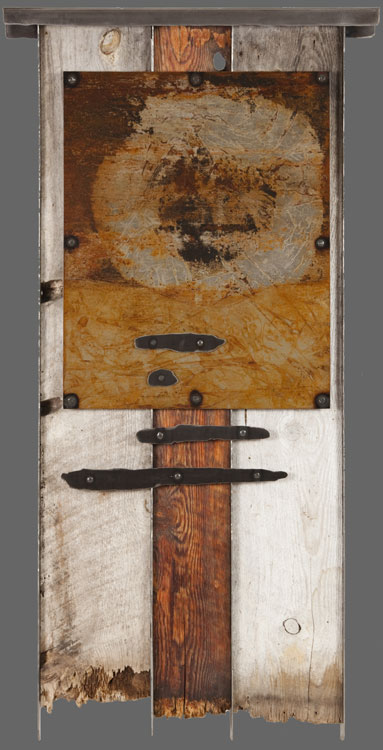
A
note about naming.
For me naming a piece is integral to the artwork.
The name, however, is for me and the viewer
is free to
perceive whatever they like in the artwork.
A piece is generally named the day it is finished
as I reflect on all that has gone on while
working the
piece. By doing so, I get to know what the piece
is helping me to understand.
Take the “Angels of Forgetting” for
example. While working on it, a friend gave me
a book she had
written about the things she experienced as a
girl growing up in Poland during World War II.
Oddly,
her recollections were not centered on loss and
tragedy.
She remembered a large amount of freedom to play
with friends because the adults seemed to mostly
be distracted.
When she immigrated to the US and became a psychiatrist,
she felt the need to listen to those who had
been to war and treated many Vietnam vets. Most
of them
only
wanted to forget what they had witnessed and
been part of.
While working on "Angels," I also listened
to footage of Studs Terkel interviewing people
twenty-five years after the great depression.
Those who were children
during the depression often recalled how everything
turned into a game. In many cases they remembered
it with fondness as they enjoyed families gathering
in
communal living situations. On the other hand,
those who were adults at the time recalled hardship,
stress
and loss.
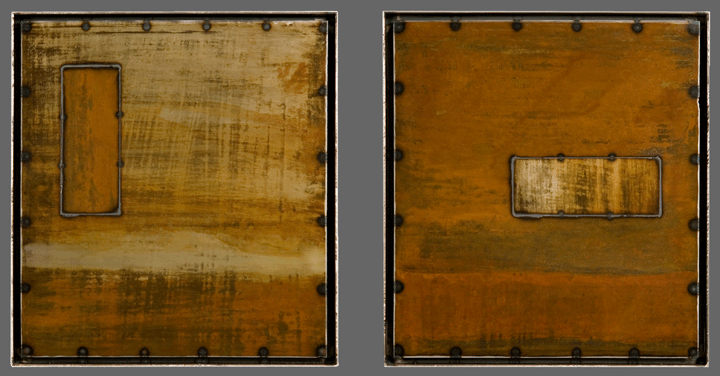
I finished the pieces on Memorial Day, so I considered
this as a significant point in naming them. Throughout
the process I had been thinking about how people
deal with tragedy. As children, we have the innate
ability to live in the midst of what the adults
consider tragedy yet remain in bliss, while adults
in the same situations suffer greatly. Culturally
we memorialize our suffering with special days,
museums and monuments.
At least this is how it all came to be in my mind
while I was working on “Angels.”
So on Memorial Day while looking at the pieces
I saw two doorways. First I saw a doorway on the
lighter piece, one accessed consciously in the
light of day. On the darker piece, the rectangle
was horizontal. It seemed to be a doorway accessed
by the subconscious, as when sleeping.
Being
Memorial Day, I was suddenly curious as to why
we like to memorialize tragedy. "Lest we
forget,” is supposed to imply that we grow
and learn from our mistakes, but perhaps it has
the opposite effect. By memorializing our unsavory
episodes then calling them bravery and chivalry,
have we ensured their perpetuity?
Maybe we should try a new tactic. What if, instead
of creating monuments to suffering, we create intentional
doorways past tragic perspectives, past judgment
to the joy of experience we knew as children. The
doorways are the grace of the same Angels that
helped us as children to live in the honesty of
the moment, so we might learn to increase our bliss.
This, for me, is encapsulated within the Angels
of Forgetting.
|